
When God is Too Big
The trouble with a Costco God in a bodega world.
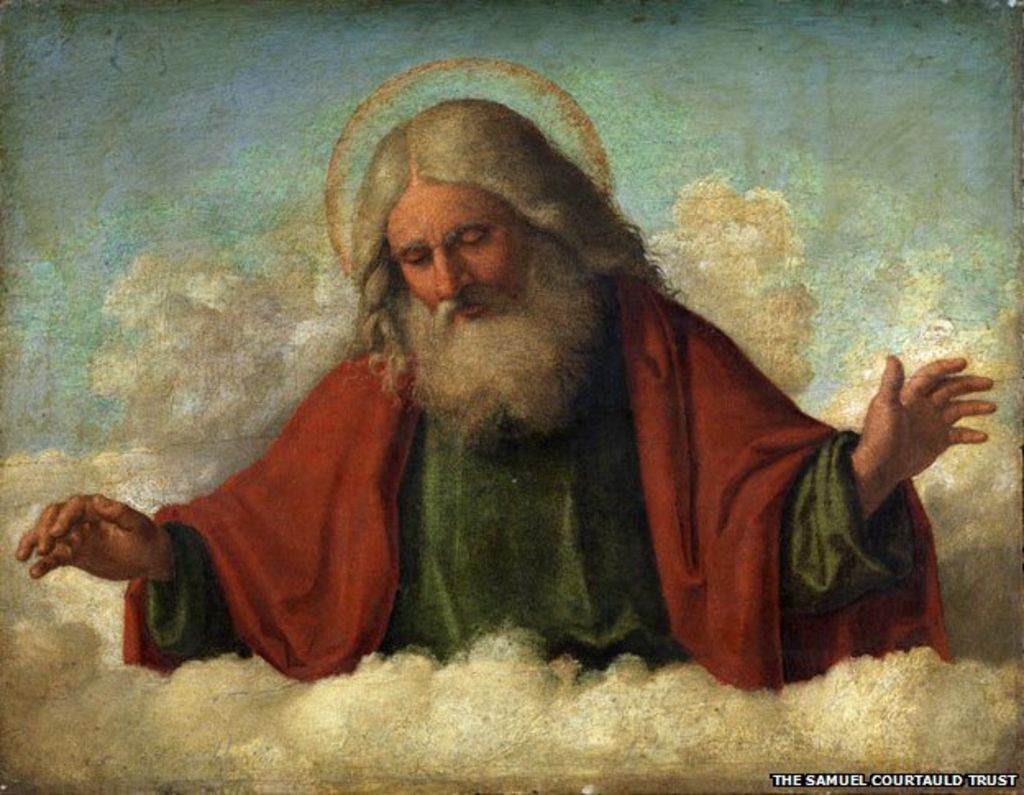
“Some of our belief systems simply aren’t adequate to make sense of the suffering we witness.” - Chris Heuertz
When I was a junior in college, I took a Labor Economics class from the campuses most infamous liberal. As a small-town kid raised by staunch Republicans, there was much in that class that was new to me, but the thing that sticks out to me was Michael Moore. A divisive figure—no doubt—but also someone whose films stick in your head. I will never forget his blustery monologue about how America was misnamed, they should have just called it The Big One, and went on to explain—from Manifest Destiny to our parking lots—the American obsession with size.
Regardless of your opinion of Michael Moore or his politics, it’s not hard to acknowledge the humor and accuracy in his renaming suggestion. America and its larger-than-life version of Christianity has always believed that bigger is better. When someone says church growth, we always know they mean size. When someone says they’re and Acts 2 church, we know they mean the part where we count how many folks showed up (a number in the thousands is preferred).
As a camp counselor, an annual summer favorite was singing about our—
Big, big God with
Big, big house with
lots and lots of rooms
A big, big table with
lots and lots of food.
A big, big yard
where we can play football!
A stadium-filling God is preferred. One that can fix all our problems and take away all our woes. This God is best described by His Omnis: omnipresent, omnipotent, omniscient. Everywhere. All-powerful. All-knowing.
Big Problems with Street-Corner Strife
Of course, the Bible is rife with superlatives for God. And it is difficult not to read those superlatives in an American tone. We like our problems big here too: racism, nuclear armament, global climate change. But our challenges present themselves over and over on a human scale.
I don’t need to recount this week’s headlines for you. And many of you will read this on a different week with different headlines. But the reality will remain the same: our systemic problems, our -isms, are felt in quite personal forms. On city streets, in hospital hallways, across the icy stares of living rooms whose marriages have gone cold. We transact our suffering at a bodega scale (the small streetside shops in most major metropolitan areas).
While we talk about what is wrong with the pain in the usual big brush strokes, we only know it in the most personal ways. The modern trend of virtue-signaling online exemplifies this. We all can adopt the language of the oppressed, meme our alignment to their woes. Signal our allyship. But it all smells a bit off. Until the pain is personal, until it we’ve realigned our friendships, our intimate connections, we never really enter into all that our -isms describe. Until we feel the problems small, they are only theoretical at scale.
Our Theology Fails
Not surprisingly, the tendency of those of us trained in evangelicalism’s magnitude and hunger for scale apply the same tactics to God. Surely our “big God” is going to do something “big” in our time. And so we pray. We pray for miracles. We pray for God to right the wrongs. We pray for God to take our side in the culture wars. Or prayer assuming He already has.
Of course—when we’re honest—this way of seeing God runs aground all the time. It is a fast track to atheism. Maybe you’ll still put Christian on your census form, perhaps you’ll keep attending church, but at the core, the belief that a giant God was benevolently looking over the world and bending events to your favor has been disproven again and again. You can’t tell anyone that, for fear of being proof-texted to death about how God’s ways are not our ways or some other verbal violence powered by Scriptural misappropriation.
All that remains is unspoken disbelief. Because the big God is the only one you were offered. Five hundred years of western theology has even tried—foolishly—to pour that Omni-God into the dark-skinned first century itinerant preacher turned Messiah. And just as the Giganto-God never fit into your recurrent pain, He doesn’t fit into the life of Jesus either.
Jesus Is Not Very God-like
One of the main problems that Jesus had when He was progressing around Palestine in 30-33 B.C.E. is that He claimed intimacy with a God He didn’t look much like. At least from the perspective of the religiously powerful. Jesus didn’t solve all the world's problems. Rome still ruled. Injustices carried on. He handed power to the weak instead of claiming it for himself. He kept His movement a public secret for as long as possible.
Jesus doesn’t act like the Giganto-God’s Messiah. His ride into rule happens on an ass. His throne is an electric chair. His victory banner is written in His own blood.
Even back to the second century, Christians struggled to make sense of this Jesus who never proved His omnis. Theological councils assembled to answer the questions that seemed obvious: How is Jesus like God? And the more they tried to theologize that with their own -isms, the less like Jesus He looked. The man traded for an icon. The suffering servant exchanged for a cosmic king.
Maybe Jesus never made clear the extent of His power because He was waiting for a better time. Maybe Jesus is just one more mystery of God was are left to wonder about. Maybe. Or maybe not.
How do we know what God is like?
For those who have spent any time in one of my Bible studies you’ve probably heard me say this one critical phrase, “God is not a mystery. God is like Jesus.”
God revels in serving the underserved.
God’s greatest joy is to welcome the unwelcomed.
God doesn’t undo the bulk of the world’s suffering; He stands beside it.
God doesn’t replace human agency; He calls it to go to the cities and towns.
God’s not interested in fame. God is the humble, suffering King.
How do we know all this? Because this is what Jesus was.
And God is like Jesus.
Jesus is not “big.” In any sense of the word. An honest reading of His life, death, and resurrection reflects vulnerability, strategic limitation, and ambiguity. Even the resurrected God appears in places and to people that can never be proven, and many that would only be discredited. Jesus’ ascension is seen by a remarkably small few, nearly all of them public pariahs with no social standing whatsoever to validate their claims. Jesus’ healings are limited and theologically driven—every time. It is no stretch to image thousands who came to Him sick and went home the same.
And it only this Jesus that is worthy of our prayer and praise.
By Wounds, We are Healed
It is impossible to reconcile the Giganto-God and the suffering of the world. It is nearly impossible to reconcile that God with the plight of an average Wednesday. But yet, we try because our civic religion demands it of us. In the process, we lose sight of the only God worth loving, a God who looks like Jesus.
The God who takes rubber bullets in the street with us. The God who weeps with us when our neighborhoods burn. The God who suffocates with us as we cannot breathe. It is this God in His miracle smallness, that sends ripple-effects of holiness reverberating throughout the world. He welcomes the murdered to His intimate home, and in their wake, whispers for the awakening of millions. God does not need to cause the crime to resurrect it to goodness. We know this because of Jesus.
We are free to see that God is not playing chess with the world and that evil runs rampant because love is strangled off by the powers, empires, human-made systems, and bastions of hate in our own hearts. We are free to abandon the Giganto-God and the ill-fitted religion He requires.
We are free to embrace the impossible wonder that by wounds, we are healed. We don’t need to go looking for suffering; it is all around. We don’t need to go looking for its cause; it is in our hearts. Our search is for healing and for the Man of Sorrows who is God, intimately drawing us to Himself.