
All the Stories Matter
I know you probably don't want to hear this: Everything didn't happen for a reason, but reason happened in everything.
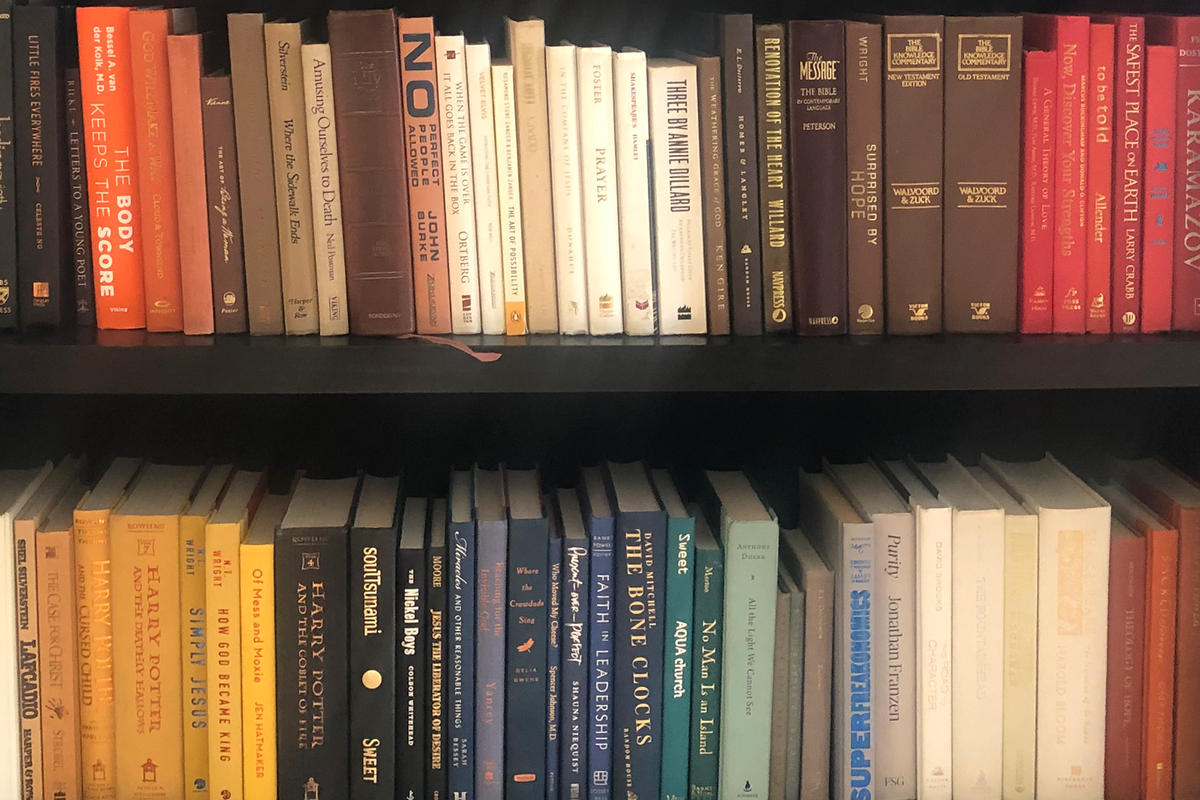
We cannot do Lent without facing what the quietness of this season brings up in us. Like a cleanse that makes you feel worse before you feel better, Lent pulls out the stuff that’s been stuck in old cells. Leaning into the the dark days before the light, trusting that the the absence of good feeling is not the absence of good, sensitizes us to both emptiness and old war wounds. Both of which we’re so skilled at numbing into submission.
If you’ve been reading along with our Lenten journey these past 10-days or so you know that I believe that wherever we are headed next we are headed there together. And though I have never met you, I know this down to my toes, we need the whole you. Not just the parts you’ve salvaged to earn your spot in today. It’s why Lent matters to me. It pushes us into the dark where the abandoned stories live.
My own journey to bring my whole self forward has not been an easy one. It has cost me more in humiliation and self-doubt than I could have ever imagined. I had to slam into walls that will never move. I had to discover my limits to find the joy in simply showing up without regrets. Along the way, what took more gumption than I thought I had, was to put all the old stories back in the book. To realize that everything that has happened didn’t happen for a reason, but reason happened in everything.
It Starts With Desire
As American Christians, we come to the journey of wholeness with a severe handicap. With some bad applications of Psalm 23 (and really the bulk of the Old Testament) we are led to believe that bland apathy is the surest sign of spiritual success. Paul’s “being content in all things,” has come to mean a kind of lobotomized self where we don’t think or feel much at all except when someone says something stupid on Facebook.
Contrary to our Puritanical training, wholeness starts with desire. It doesn’t end there, but our wants have the power to pull us out of the self-induced coma and back into a waking life.
Almost 20 years ago I was generously invited to lead a brief session at a day-long retreat. The attendees were pastors and leaders, most of them twice my age at the time, probably wondering what this 25-year-old (who looked 17) was doing talking at them. The exercise was a simple one, but one that I have used to great effect many times since.
- Think about something you want. (Free of judgment)
- Why do you want that and what else might you want?
- Keep asking deeper and deeper until a strong memory kicks in.
One participant, a woman in late middle age, was visibly shaken by the exercise. I asked her if she would be willing to share her experience:
A Book on a Shelf
I first thought about how I would like a good book to read. Then, when I gave myself permission to want without judgment, I imagined having an entire beautiful library of books. I have always been an avid reader, so nothing here was revelatory. I pictured myself choosing a particularly attractive leather-bound tome and sitting down to read it. Following the exercise, I asked the question, "Why do I want that and what else might I want?"
Jarringly, I felt a magnetic desire to BE the book. Trying not to judge this feeling, I asked myself the wanting question again. My mind wandered further. I imagined myself as the book, being held, poured over by a loving reader—a reader like me who gets absorbed into whatever book is in front of her and can't be bothered by anything else.
Like a movie, the scene in my mind morphed. It was no longer me sitting in the chair reading the book, but my mother, lost to the world around her, including a child-version of me, her heart and mind enveloped in the pages in front of her. I remembered all the times I'd watched her soaked in her beloved books--reading them, knowing them, understanding them.
The answer to the reflection question suddenly became clear: I want to be a story someone would love to read.
Judgment-Free Silence
To some, this sounds like the beginning of a complicated therapy where the participant then has to sort out all kinds of bad feelings toward her now-dead mother, but that is not the point of the exercise at all. The old story—specifically the merged memory of all the "mom reading a book" stories—was a piece of her current waking life. She had spent so many years trying to play small, sublimating her desire to be known, loved, and appreciated. She was a capable pastor and wife, she was supposed to be beyond feeling the opinions of others, but she felt them still.
They quaked around in her, making decisions on her behalf, demanding her attention. Torn from the bindings, the old stories act as a nuisance and a drag, rather than an impulse to humility, connection, and faith. Once acknowledged and the pages are sewn back in, the old stories give us back a piece of ourselves.
We never "get over" our stories. They may, through retelling and therapy and forgiveness, lose their acidity, but the work is never to “move on.” The work is to move in. To inhabit the chapters we've lived. They are, for better or worse, the prologue to whatever happens next. We never start over, we only continue.
The silence of Lent and its willingness to face the unfinished will often bring up the old stories. Or at the very least, the old feelings and wants. As you are traversing through these days when feelings and thoughts both wild and unwelcome come your way, let the quietness of Lent do its work: awareness without judgment. Why do I want that or feel that? And what else might I want?
When you find the stories you've knowingly or unknowingly tried to forget, sew them back into the binding. Welcome them as unfinished chapters. All the stories matter.
When you subscribe, you get the whole meditation right in your inbox. Some people like that, maybe you will too: