
We Were the Ones
Not because I couldn't believe anymore, but because I couldn't believe any less.
Trigger Warning: I’m about to get specific about my journey out of *evangelicalism. For those that have chosen to stay, it may be easy to assume I am saying you are wrong. I am not. The wide world of God’s goodness cannot be contained in any one stream of faith
Some years ago, I felt clear that my path was one of exile from the approved city of “G”od. This is a piece of how I came to know it. I tell my story so that others who find themselves at home on Sunday—wondering how they go there—know you are not alone.
*Specifically, I mean white evangelicalism as Black evangelicalism has a very different theological and social structure. For the sake of brevity, I will use “evangelicalism” as that was my experience of it.
In the fall of 2004, I rolled out of the Willow Creek parking lot for the last time. Along with 20 of my closest friends, I’d set out to Denver to re-discover church. To double-down on community, the deep waters of faith, and something that transcended the marketing machine that had been my home for three years.
That was the same year that the Willow Creek elders (to whom I was no longer subject) called me and interrogated me about starting a cult. They didn’t like that our church plant materials didn’t say enough about sin, and talked about Truth and Goodness and Beauty as (gasp) capital-letter attributes of the God who is Love.
I had asked some of my Willow-attending friends if they would financially support our church plant. Willow responded by saying it was their job to protect their sheep from wolves like me.
Wolves Like Me
The church we planted was short-lived and succumbed to the weight of higher ideals than practical skills and my juvenile leadership skills buckled under the pressure. In the healing journey, my wife and I found a Denver area church chock full of therapists and deep spiritual thinkers, led by a complex theologian whose thoughtfulness was a salve to my wounded heart.
Six months after attending, he was stripped of his decades-long pastorship and removed from his evangelical denomination. He wrote a public paper considering Christian universalism, a doctrine accepted by many of the Church Fathers. He took seriously the Bible’s view in Revelation that Jesus would in fact make “all things new,” leaving no exceptions to burn in endless torture.
The pastor, like many historical Christians, couldn’t reconcile the all-encompassing love of God with eternal conscious torment. He was excommunicated for his questions.
At the next church, I was instructed by the senior pastor, an executive in the National Association of Evangelicals, after he had delivered a sermon directly shaming the audience, to stop questioning him.
“I’m not looking for questioners. I’m looking for soldiers.”
Soldiering On
That was eight years ago. I’ve been in and out of churches ever since, but that was my last “We go to X church” experience. These focal points in a long journey out of the evangelical herd shade over dozens of other moments where the safety net of American church began to unravel beneath my feet.
Today, it is clear that my experience is not unique. I’ve spoken to dozens if not hundreds of people who have been quietly or loudly excommunicated. Black women pastors who get asked when walking the halls of the church if they are there for the food bank. LGBTQ volunteers who are removed from fellowship unless they renounce their sexuality.
When I think about all of those people (real stories with real names), and what we share, the most significant thing rarely gets said. We were true believers. We were the tithers, the setting up chairs at 5 am for Sunday service, building hospitals on mission trips, the WWJD bracelets in the face of teenage ridicule and bullies.
The majority of people I know who are spiritually homeless today were the card-carrying evangelicals of our youth. Some people stayed. And that’s ok. But many of us left. Not because we didn’t believe anymore, but because staying required us to believe so much less.
Shout to the Lord, All the Earth Let Us Sing
Earlier this month, this tweet from the international megachurch founder of Hillsong (home of the 👆👆👆 famous worship song) tweeted what so many people have implied to me over the years:
When someone can just walk away from their faith, I would question the strength and validity of their faith in the first place.
— Brian Houston (@BrianCHouston) 2:26 AM ∙ Oct 2, 2020
The labels come in thick: if you didn’t follow your leaders into the arms of Trump (socialists), or if you didn’t renounce your queer brothers and sisters (liberals), or if you expected people to wear COVID masks (fear-based), or marched with your Black siblings (Marxists). If you showed any sign of any of these things? We were unmasked as fake Christians all along.
I am only just now beginning to face this grief: the arc of Christianity that formed me, the stories that shaped me, the leaders that I aspired to have led us here. Where evangelicalism’s patriots use their universities as hedge funds, their ministries as grandstands for toxic narcissists, their power as a vehicle for sexual harassment.
I was ready to give my whole life to the cause of reaching the nations… until all the earth would sing. I’ve been converted at so many altar calls, balled my eyes out at the last song of so many conferences. I was the first camper to recommit during the campfire refrain of I Have Decided to Follow Jesus.
I would have never imagined that following Jesus would lead me to a place where I so often find Christianity unrecognizable to me. Perhaps I’m unrecognizable to it.
I wish evangelicalism understood that those of us who left evangelicalism were actually the ones who were better evangelicals than our leaders.
— Mason Mennenga (@masonmennenga) 3:02 PM ∙ Oct 7, 2020
We were the ones who only listened to Christian music.
We were the ones who evangelized.
We were the ones who remained sexually pure.
Mason Mennenga may not be your brand of theologian and that’s OK. But his words have been ringing in my ears for the past week.
We were the ones.
We were the ones who invited our friends to Awana.
We were the ones who sang special music.
We were the ones who kept our purity promises.
We were the ones who didn’t drink, do drugs or date girls who do.
We were the ones who led the college ministries.
We were the ones who raised the money.
We were the ones who led the late-night prayer meetings.
We were the ones who refused spectator religion.
We were the ones who begged for the Bible to be taken seriously.
We were the ones who wanted more than buildings, rock concerts, and capital campaigns.
I have had so many people publicly pity me for my “loss of faith” in the years since I left the megachurch. I just want to be clear. I did lose my faith. My faith in the system, in the institutional church, in the four spiritual laws, in the fire insurance, in the moral superiority.
I had to lose them all to find my faith in Jesus.
I Remember You
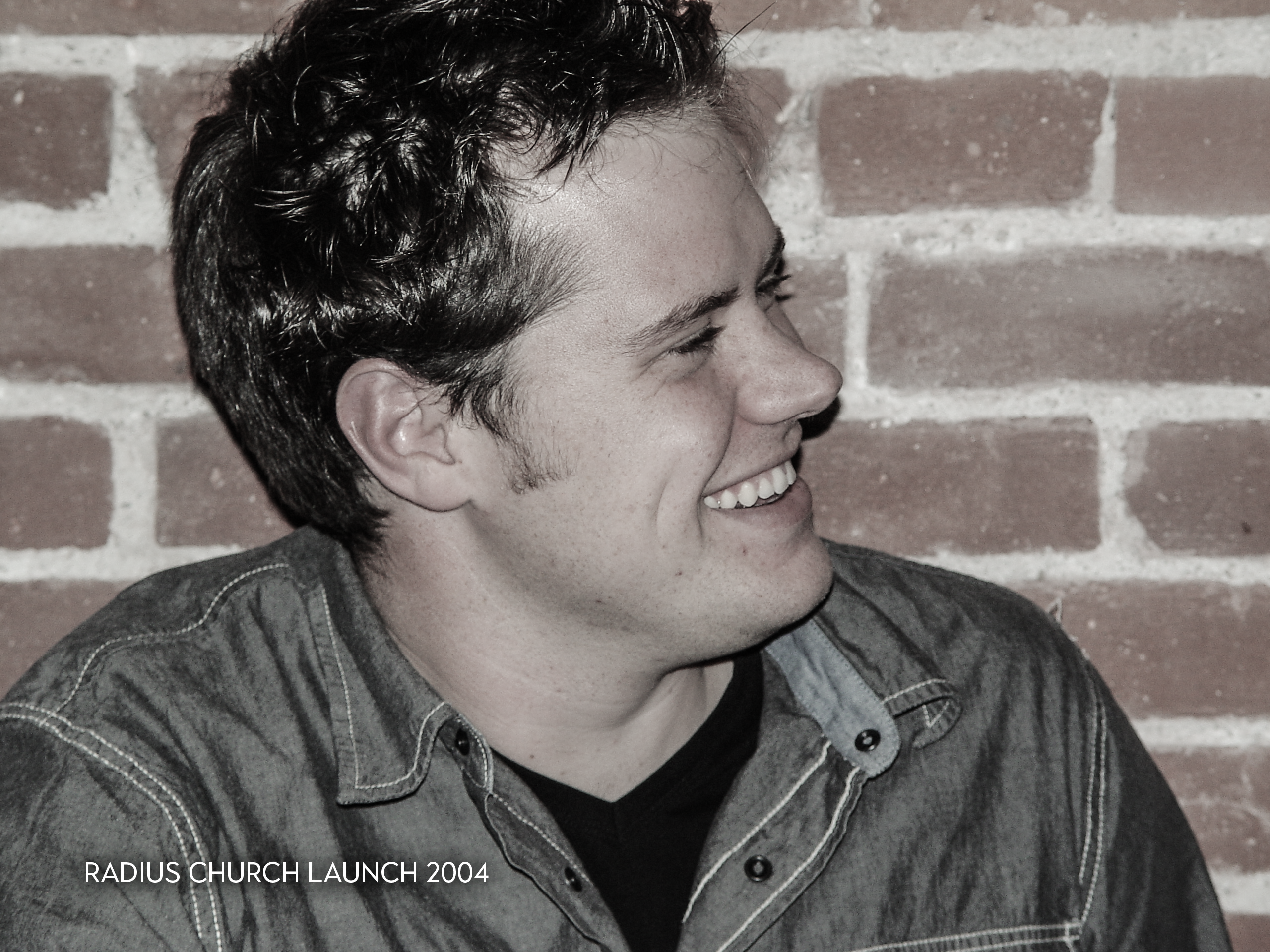
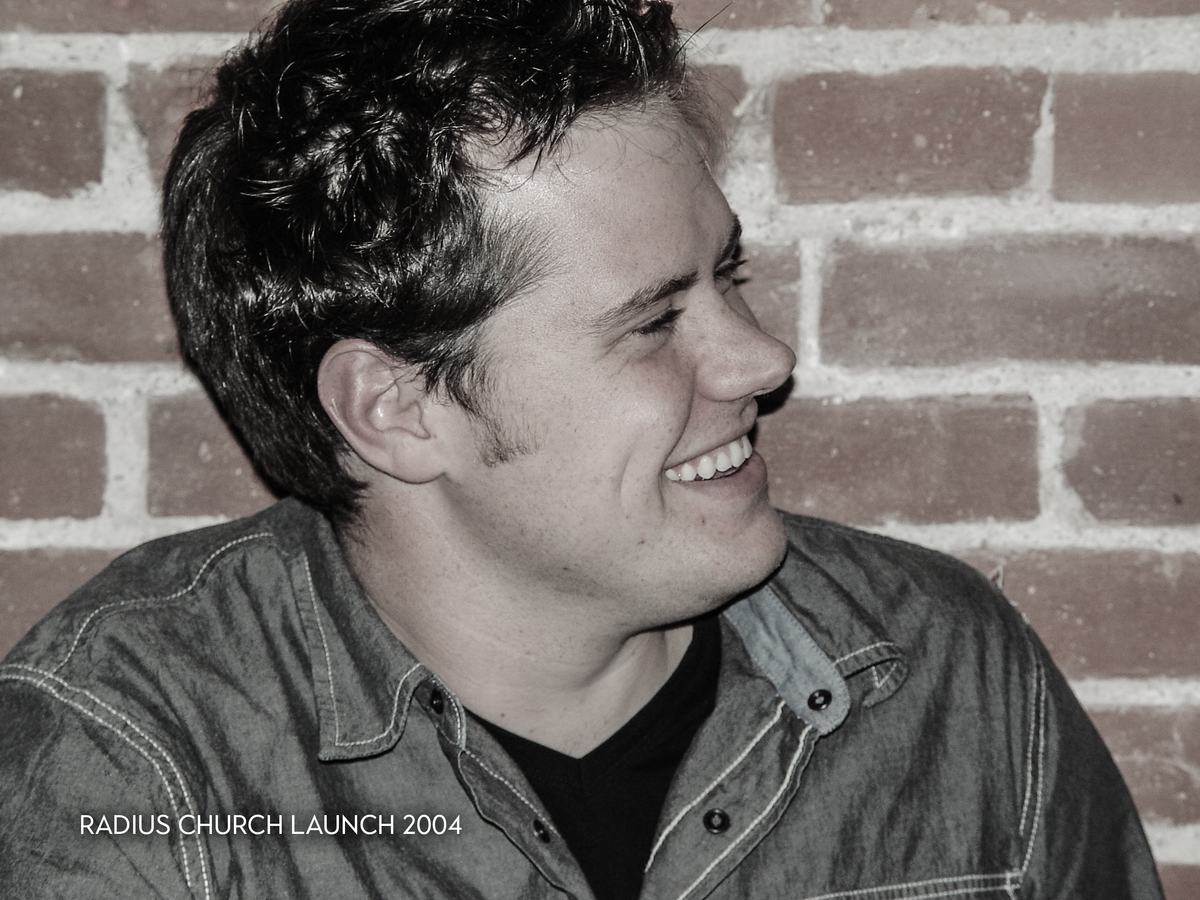
I look at this picture, taken the weekend we launched Radius Church in 2004, and I remember life before the breaking. Before my faith was strained beyond recognition, before I had to lose it to find it. There is a concept in mystical traditions called the second innocence.
It refers to the point in faith where you blend the exhuberant innocence of your childhood faith with the lessons learned by adulthood. The result, is a re-opening, a re-awakening to the unfettered joy of following Jesus into a world unknown. For many years, I followed the hints of people around me and my own shame that I needed to “get back to that guy.” But there is no getting back. I can’t unlearn what I’ve learned.
But I can bring forward his joy, his hope, his belief that Jesus was remaking souls and lives. Now unencumbered by the handcuffs of broken religion.
Let’s go.
Maybe your story parallel’s mine. I’d love to hear about it. This is gonna keep being a place for people like us. My little corner of the internet, built for rediscoverers. For those willing to be like children and fools again.