
Is Macbeth "The Man?" and other teenage questions
A conversation with my son about masculinity and how far we'll go to avoid becoming "none."

Quick caveat before “something wicked this way comes:”
I’m certain the world doesn’t need one more newsletter. I already write four in my business life. (editions.culturecraft.com if you’re interested). I’m not even sure this is a newsletter, given that I last wrote here 28 months ago. (OK, definitely not a newsletter.)
But here’s the thing: Now firmly in middle age, I know that I need to think out loud. Writing has always been one of those “conversations” that meant the most to me. I’ve been writing on the internet in some form for over twenty years.
So I’m back here, where the history of my writing exposes me a little, where I’ve written strongly worded essays about things I’m not sure even still believe. But where the words have done so much work to till the soil to grow something new.
A Lexicon Farm.
There are no promises on when (or if) another essay shall appear here. And if it’s unwelcome in your inbox, that unsubscribe button is right there waiting. Thanks for your attention, I know at a deep level just how precious it is.
________________________________

My freshman son stared into his screen, disgruntled at its update to his English grade. Somehow, the discussion in that day’s class had moved him down a notch for reasons he couldn’t explain. They’re in the final days of their unit on Macbeth.
Macbeth, for all its quotability, was not well-loved by my son and his peers, to no surprise. Even I will acknowledge that Macbeth is an odd choice for freshman year. Some may say Shakespeare has no place in a high school curriculum in the year of our Lord 2024. But Macbeth is particularly tough. Its themes revolve around psychic roots that take decades to grow—ego, paranoia, twisted loyalties, the will to dominate, and the power dynamics of an aging romance.
“What could have happened today that lowered your grade?”
“He’s grading us on class discussion, and we’re supposed to show understanding of characterization and theme.”
Oh, just that. I thought. No big deal. English class has changed dramatically since I was 15. I took the opportunity to dive in.
“What is the theme of Macbeth?”
“Well, there are a lot, but I focused on defying gender roles.”
Narrator Voice: Ummm, ok. This essay is starting to shape up like a humble brag about my teenage son. Not what I intended. But this conversation did actually happen. And is necessary to get where we’re going.
He went on to tell me his thoughts about Macbeth feeling the need to “be the man” and that killing Duncan was an act of overt masculinity. While Lady Macbeth egging him on was abandoning her traditional, docile role as a woman. “She’s trying to get him to be the man.”
Being the Man
Since moving back to middle America, I’ve watched my sons be increasingly exposed to more patriarchal worldviews. Men are often assumed to be leaders, women caretakers. Men consumers, and women creators. Where in our past life, men and women socialized in mixed groups with ease, it’s now more common for the wives to group up in the kitchen while the husbands tend to the big-screen TV.
None of this is overtly wrong. But I grew up in a world like this, except more extreme. A world where being male had very particular striations, which did not include feelings, nuanced communication, sensitivity, or creative expression. The world I knew and the world I now watched my sons engage in weren’t the same, but they rhymed.
Our household doesn’t fit this mold. I am the decorator of the house. My wife is carefully tracking her March Madness bracket. We both cook. For a long time, none of this felt like a particular cultural achievement. It was just our life. And then teenage sons entered the chat.
Between baking cakes and drawing, my sons are exploring workout culture: watching videos on YouTube about the perfect pump and the moral perfection of a cold plunge pool. Rising testosterone has raised questions about body image, what strength looks like, and—per the title of this essay—what it means to be a man.
Add to this mix, today’s algorithmically driven slippery slope from plunge pools to bro culture to toxic masculinity to Andrew Tate. With stops along the way like this video from a megachurch pastor telling thousands in his congregation how a woman should physically submit to her husband on their wedding night. (All as the leadup to telling some people in the room they are potentially going to hell.)
Which—unironically—gets us back to Macbeth.
All that may become a man
I dare do all that may become a man;
Who dares do more is none.
(ACT 1, Scene VII), Macbeth
Unable to refrain from pushing the conversation further with my son, I quickly pointed us to the above scene from the play.
“What do you think it means?”
“It means no one is willing to do more than Macbeth to be a man.”
Hmm, dear reader, that is not what it means. The grade was making more sense, and I saw in his angle, the tinge of today’s masculine archetypes, sending alarm bells off in my mind.
“I can see how you would think that. But it actually means that Macbeth feels he has done everything that should be required of him to be recognized as a complete person. And to do more would make him worse than a bad person, it would make him no one at all. It’s foreshadowing. The more Macbeth gives into his drive for power, the more he loses his humanity. Yes, Shakespeare is playing with gender by how much this is influenced by the power lust of his wife, but the real story here is that his ego will destroy him. He becomes ‘none’ in the end.” (this is a summary of about 15 minutes of back and forth)
And from there we continued, comparing scene against scene. Murder against murder. Ego against ego, disentangling a fragile modern view of masculinity from Macbeth’s deeper truths.
We landed in the most famous soliloquy of the play:
Tomorrow, and tomorrow, and tomorrow,
Creeps in this petty pace from day to day,
To the last syllable of recorded time;
And all our yesterdays have lighted fools
The way to dusty death. Out, out, brief candle!
Life's but a walking shadow, a poor player,
That struts and frets his hour upon the stage,
And then is heard no more. It is a tale
Told by an idiot, full of sound and fury,
Signifying nothing.
(ACT 5, Scene V), Macbeth
“Macbeth isn’t trying to affirm his masculinity. He’s trying to prove his worth. It’s just like Hamilton, which is a kind of retelling of Macbeth.”
My sons love the Broadway smash, Hamilton, which creatively retells the rise and fall of the Founding Father, Alexander Hamilton.
“Hamilton is about Macbeth?”
I guess dozens of listens to the cast recording still leave some gaps. I played him the lines from Take a Break, sung by Hamilton himself:
My dearest, Angelica
Tomorrow and tomorrow and tomorrow
Creeps in this petty pace from day to day
I trust you'll understand the reference to another Scottish tragedy
Without my having to name the play
They think me Macbeth, ambition is my folly
I'm a polymath, a pain in the ass, a massive pain
Madison is Banquo
Jefferson's Macduff
And Birnam Wood is Congress on its way to Dunsinane
Like Macbeth, Hamilton’s confused relationship with the women in his life wasn’t the source of his problem, only the foil. His masculine search was simply a strain of a deeper one that drove him to his own self-made destruction. Ego, yes. But deeper still, the existential dread that life comes to nothing. That we would finish life surrounded by sound and fury, signifying nothing.
That race against nothing is what puts a man on YouTube screaming about his pump and why he can’t get a woman who knows her place. (Or a preacher to imply that the best path to sexual intimacy is a man telling a woman exactly what to do and her complying without any agency of her own.)
My son scribbled notes furiously, preparing for the next day’s class discussion, where he was determined to put his grade back on his preferred track.
Tomorrow and tomorrow and tomorrow
“I got my grade back up!” he shouted over the loft ledge the following afternoon.
“So it went well?”
“Sort of, everyone disagreed with me. They said that Macbeth murders everyone out of paranoia, not ego. But my teacher liked my answers.”
“Paranoia is a form of ego.” I returned serve. But just as the sound of my voice passed into the loft, he was gone, back at Minecraft, building complex worlds that map his imagination. My thought partner on the intertwining of modern-day toxic masculinity and centuries-old wisdom on ego had moved on.
But the old Bard Shakespeare had done the work he’s done for centuries… taking the surface of our lives and ideas and plunging them into their deeper truths, using anachronisms to cross time and space, exposing the fragile core of our human hearts.
I’d been wringing my hands for months about how to find an entry point to talk about toxic masculinity with my son. I didn’t want him to be afraid of his drive. I didn’t want him to stunt the energy he was putting toward his physical health. But I also knew how quickly, with the help of the internet, these same drives turn from self-care to self-hate, body dysmorphia and toxic views on gender.
We are all so easily made.
The story of Macbeth is not his strength or his masculinity but his fragility, our fragility. He begins as the conquering hero but is quickly warped into a (yes) paranoid, obsessive monster by some weird sisters, a power-hungry wife, and—most substantively—his own lack of resilient core. (not a backhanded reference to his missing ab workout)
I suspect few readers will find that the great Scottish tragedy is their way into hard conversations with their teenage sons. But perhaps you will see that with our children, where there are no doors into their inner lives, there are often windows. And when we are watching carefully, we can see them.
Not just the windows, but the light of the person being made inside.
Thanks for reading Lexicon Farms. Subscribe for free to receive new posts as they happen.
Marginalia
Here at the end, I’ll try to leave a few recommendations for ways to explore further in art, stories, music, and culture because the threads of our making and unmaking are everywhere.
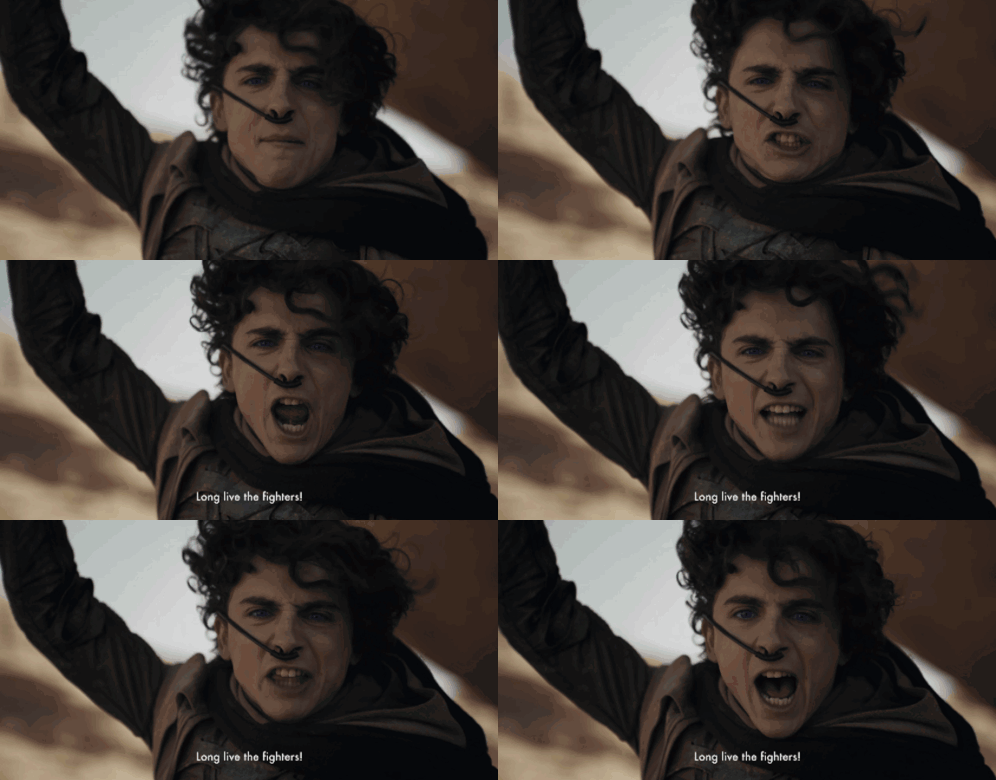
Dune, Part 2
This year’s sci-fi hit is another rich text to explore with our young people on the dangers of ego, the conflation of power and responsibility, and even the toxic mixture of faith and politics. It was one of my favorite cinema experiences of the last 20 years, and worth talking about even to discuss how one might actually ride a butthole-shaped sandworm.
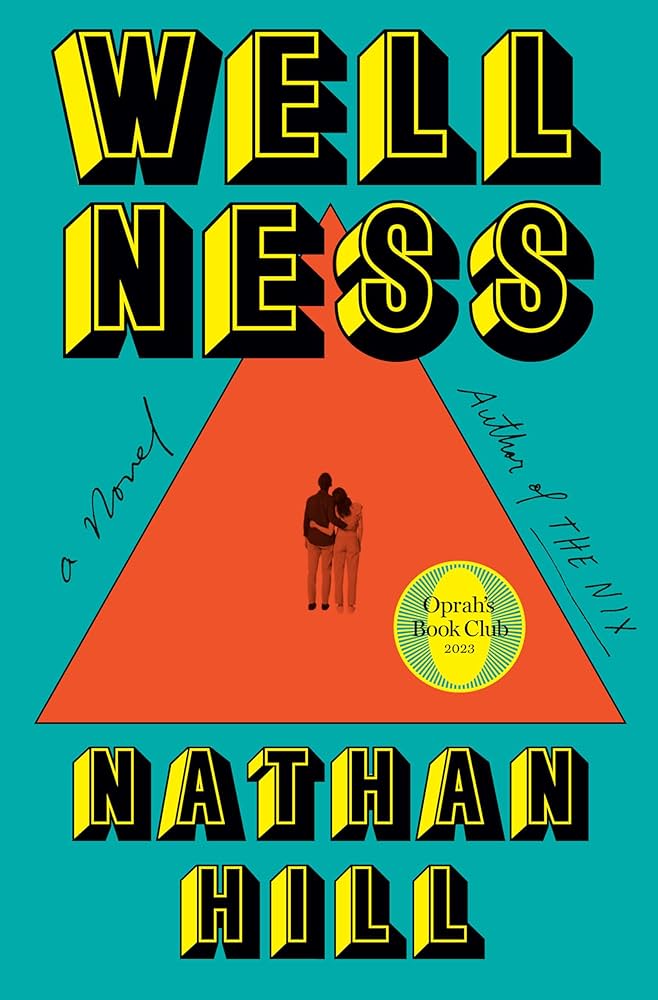
Wellness by Nathan Hill
For a more modern look at a “weak” man’s journey through the modern maze of toxic health culture and a marriage’s abutment by the corrosive power of internet culture, read Wellness. One of my favorites of the 2023 shortlist.
Now I must go and bake a carrot cake.

Thanks for reading Lexicon Farms | Essays by Nick Richtsmeier! Subscribe for free to receive new posts and support my work.