Creed and Crawdads | Race and Empire
I don’t set out each year with a reading “Focus.” For one, I’m terrible at focus. For two, I need freedom throughout the year to ebb and flow, to follow attractions to unexpected genres or titles. But when I see a year in books in reverse, I find there are themes.
I didn’t do a lot of New York Times bestseller reading over the last 12 months, but when I did, beauty emerged. From Educated, the enthralling memoir of a fundamentalist family which produced an Oxford-educated graduate student to Where the Crawdads Sing, a stunning novel worthy of all its accolades, I was sucked in all. the. way. These stories were dripping with nature, with people whose greatness would never win them praise on LinkedIn, with the glory that comes only in simplicity. While it didn’t make my year-end review list, I have to add the agrarian classic Jayber Crow to the list of love letters to nature and the simple life. The world is better because Wendell Berry is in it.
On the non-fiction front, I trended gravitated toward emerging thought in our post-evangelical landscape: Pete Enns (host of The Bible for Normal People podcast), Brian Zahnd (great deconstructor of the myth Christian empire), and a new discovery from Down Under, Ben Myers. Along the way, I was transformed by Black women writers, one of my few intentional focuses in 2019. My friend, Austin Channing Brown’s memoir, I’m Still Here, chronically her experience as a Black woman in White spaces is like her: a firecracker of wit, wisdom, and concise insight. I also loved Wil Gafney’s complete re-imagining of the women of the Old Testament, re-framing for me not just them, but how I will forever read the Bible.
In the end, there were more books I loved this year than I could have possibly planned. An embarrassment of riches, really. It’s my pleasure to share nine of them (in no particular order) with you.
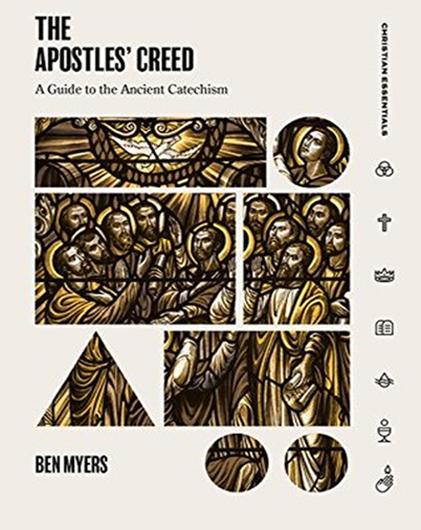
The Apostles’ Creed by Ben Myers
I was not raised in a liturgical tradition. Growing up in church my whole life, I didn't even know the contents of the Apostle's Creed until seminary and even then only studied it in a cursory manor. (Baptist seminary) I've been awakening—like many others—to the uniquely grounding effects of the high church traditions, and at the same time realizing how much I have to learn. I was introduced to Ben Myers through another source and was excited to read what he had to say. This book is--and I'm only a little hesitant about the hyperbole--one of the most important books of its length I've ever read. It is JAM-PACKED with wisdom, theology, deep love for Jesus, and intellectual groundedness. I will go back to again, for sure. I will need to, as its ability to enlighten my 40-year-old spiritual journey is nearly unparalleled by other things I've read.
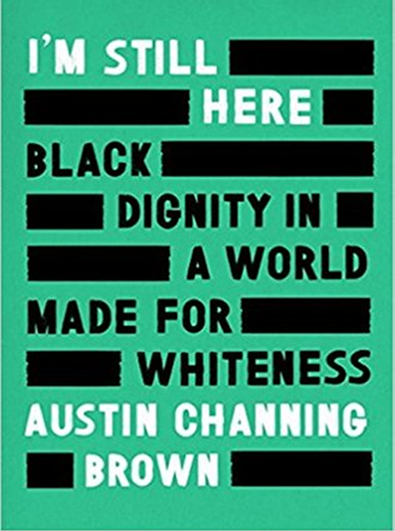
I’m Still Here: Black Dignity in a World Made for Whiteness by Austin Channing Brown
I read this beautiful book so swiftly which, to some degree, I regret. The speed of the read was in part due to Austin's incredible economy of words to say so many things, but mostly because with every page I wanted more. The regret I carry is driven by this book's need to permeate you. For those who bristle a little bit at the idea of white privilege (the concept that every person has struggles, but by being white those struggles are never accentuated by the color of your skin), Austin's story and her unmitigated honesty offer us an unearned entry point into a worldview we need.
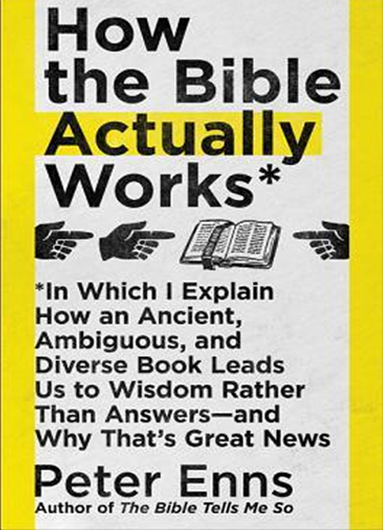
How the Bible Actually Works by Peter Enns
The stories of young students who go to college, encounter the Bible’s many variances, and in the end “lose their faith” are mythological in scope. Just this week on Twitter a Southern Baptist pastor admonished folks that the one thing we all needed to do as Christian parents was to ensure that our children were not exposed to academic views of the Bible. I find this all to be raw foolishness. My life’s story is what it is in part because I was exposed to a deep respect for the Bible’s ancient, complex, thoroughly unscientific and in some ways baffling method of telling God’s story in college. And I was given that gift by people who loved Jesus. For years I’ve been searching for a resource like this book to help others abandon their fear of seeing the Bible critically, understanding that taking the Bible on its own terms (not on the literalist terms we force upon it) is one of the best things we as believers can do. Pete Enns is self-effacing, brilliant and a lover of the Bible. He will not come to all the conclusions you want him to, and that is part of his great gift to the world.
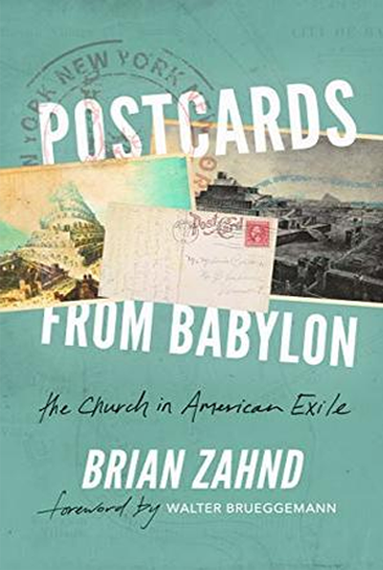
Postcards from Babylon by Brian Zahnd
It's rare to find a book so timely and yet so incredibly timeless. In just 175 or so swift pages, Zahn gives us the most Biblically ground view of geopolitics I've ever read, a survey of the Bible's key passages on war, nationalism, economic prosperity, and the tension between our Christian identity and citizenship of any particular country. In between, he stunningly and incisively exposes the American church for its complicity in a national religion that is not just syncretistic with Christianity but bears a lesser and lesser resemblance to the Way of Jesus with each passing year.
I can honestly say I've never read anything like it. While it provides a great companion piece to Greg Boyd's Myth of Christian Nation, Zahnd, in his more prophetic voice (Boyd is more pastoral) calls us to such a different way of being that any honest American white evangelical has to take just a short minute and ask, am I really a Christian at all?
Wonderful. Rocked me.
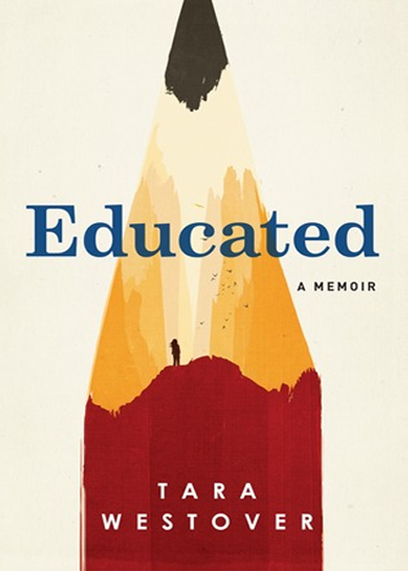
Educated by Tara Westover
Tara's unflinching, shockingly self-aware memoir is more than just the story of her upbringing in a complex and highly toxic family, more than just the story of how she discovered Western education and found the right to her own point-of-view. It is more than a study in undiagnosed mental illness and the incredible power of isolated paranoia. It is at least these things, but it is so much more. The story is about all of us, in our own way. The ways that we slowly allow the words of others to become our words, the memories of others become our memories. It is about the fight to validate ones' own voice, not as a way of shouting over others, but as a way of not screaming our way through the night. To say I loved this may tell you something about my own mental health, but I care very little. I found in both Tara's anxiety and her courage a definition of what it means to be oneself in the face of incredible odds.
Where the Crawdad’s Sing by Delia Owens
This book is worthy of all the praise it has received. The prose is delicate, the story winsome. The author exposes the fertile peat of classism without ever flirting with a sermon. Her central character (arguably the only character), Kya Clark, is rich, complex, brilliant, wise, fully-formed and immune to caricature. Everyone else lives in her orbit, though they do not know it. Though the end has received much attention for its subtle twists, it is the meaty middle that deserves the highest praise. While written on the canvas of a murder mystery, the book's central conceit is not a whodunnit, but a love story. A love story about marshes. A marsh girl. And the gifts she left to the world without it ever recognizing her.
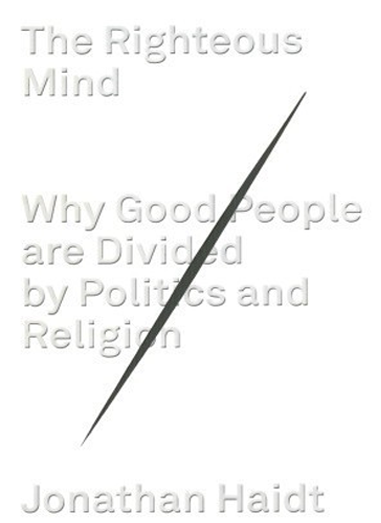
The Righteous Mind by Jonathan Haidt
Sometimes when I'm reviewing books I find—for no apparent reason—my mind wandering to that barely-there villain of Dead Poets Society J. Evans Pritchard, who encourages us to score writing on level for its artfulness and on another for its importance. Mr. Keating eviscerates such logic and instead encourages us to beat our chests and stand on desks to move our perspective. But I find that more than random gestures of faux teenage masculinity, Mr. Pritchard's question is often at play when I'm reviewing a book. Said differently: How much did I enjoy reading it? AND How substantial was it's content? I've enjoyed many a book that was high on the pleasure scale and low on the substance scale. I have even plodded through a few in the reverse (Moby Dick anyone?). For me, the Haidt book will live on with me for a long time on both fronts. He breaks down the complex questions of why we do what we do and what we consider to be "good," the groundwork of moral philosophy in a way that has real-life implications and swiftly exposes the nakedness of the conventional wisdom. But he also lays the groundwork for really transformational thinking on how we might build a better world in the two arenas that are often hardest to talk about, but deeply affect our sense of the stability of our world: religion and politics. Haidt will not be for everyone, but for those who are asking the questions of why the definition of morality has moved so far and how to think about it in ways that could help us refind our moorings, Haidt offers real guidance and real frameworks that will live with me for a long time.
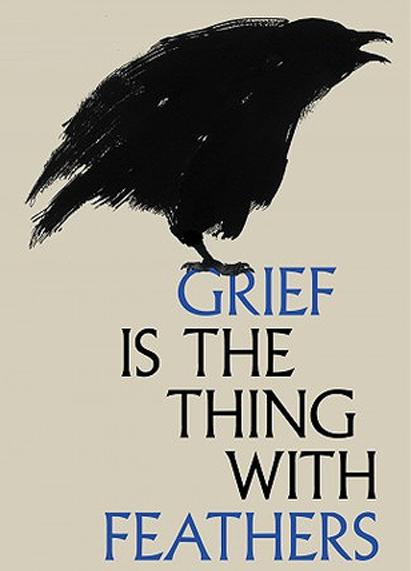
Grief is a Thing with Feathers by Max Porter
I loved this so much. The brash creativity. The impulsive yet carefully crafted structure. I've read dozens of books on grief. I've taught classes about it. And yet, something about the strange, mythical intrusiveness of this book gave me a fresh perspective on my own grief as well as others. The fantastical metaphor of grief appearing as an oversized crow in the household of a dad and two sons who just lost their wife/mother will be too much for some. But heightened reality fiction (of which this is a paramount example) exists to break us free from our frontal cortex-obsession with literalism, helping us to see the fluidity of how things really are. I ached for each character, even Crow, who is there as a necessary friend masquerading as a nuisance. Such is grief. One of our truest allies. One of our most unwanted guests.
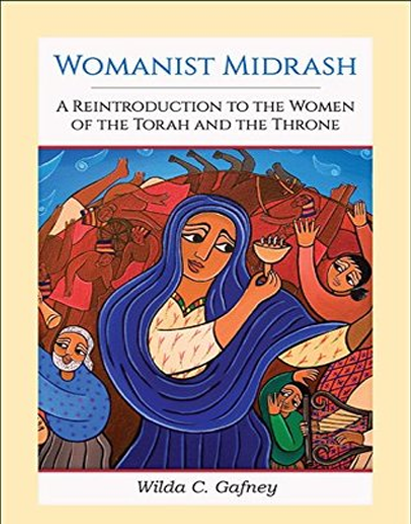
Womanist Midrash by Wilda C Gafney
I accepted a long-overdue challenge this year to read more theology by women and POC. To be honest, I was nervous. Not because I thought I would find something "wrong" but because I didn't trust myself to be able to integrate wisdom from Christian experiences so different from mine without going to extremes, trying to figure out who is "right" and who is "wrong." Enter Wilda Gafney. Her book was such a gift to me, an undeserved one. I felt drawn in by her incredible intellect, her well-researched view on the text, and her comprehensive and yet human take on the under-told stories of the women of the Hebrew Bible (Old Testament). Wilda is famous for saying that she won't let a passage go until it gives her a blessing, no matter how ugly that may be. You can FEEL that in her writing. She educated me on the rich concept of "Midrash" (How have I been studying the Bible my whole life and am JUST NOW learning this... oh yeah, white guys.) She was clear when she was taking direct material from the text and when the Spirit-informed imagination of her teaching was taking hold. The book is heart-breaking. It systematically shows the hundreds of stories that aren't told, and dozens of others that are told in a dramatically one-sided way. (The segment on Moses' wives is particularly good.) She breaks down the implicit rape-culture built into the text and the slaveholders’ bias that showers so many pages of the OT. I was reminded in an incredibly deep way that to love the Bible is to love something exemplifying deep beauty and deep brokenness. There's no way to cross-stitch these truths away.
For the full survey of my life in books for 2019 click the button below.